
 98448444


Buddhist Funeral Services
Buddhist Funeral Services Singapore
Singapore Funeral Committee provides professional Buddhist funeral services in Singapore, helping families arrange a dignified and respectful farewell according to their Buddhist traditions, family practices and wishes.
Our funeral directors assist with the practical arrangements throughout the funeral, including care and transportation of the deceased, wake setup, casket arrangements, coordination of religious proceedings, funeral-day logistics and cremation or burial arrangements. We are available 24 hours a day to guide families following a death.
Buddhist Funeral Arrangements in Singapore
Buddhist funeral customs can vary according to the family’s tradition, cultural background and religious practices. Prayers, chanting and ceremonial arrangements may therefore differ from one family to another.
Our funeral team respects these differences and works with the family and their appointed monk or religious representative where required.
Our Buddhist funeral services can include assistance with:
- Collection and transportation of the deceased
- Professional funeral director assistance
- Preparation, dressing and care of the deceased
- Embalming where required
- Casket arrangements
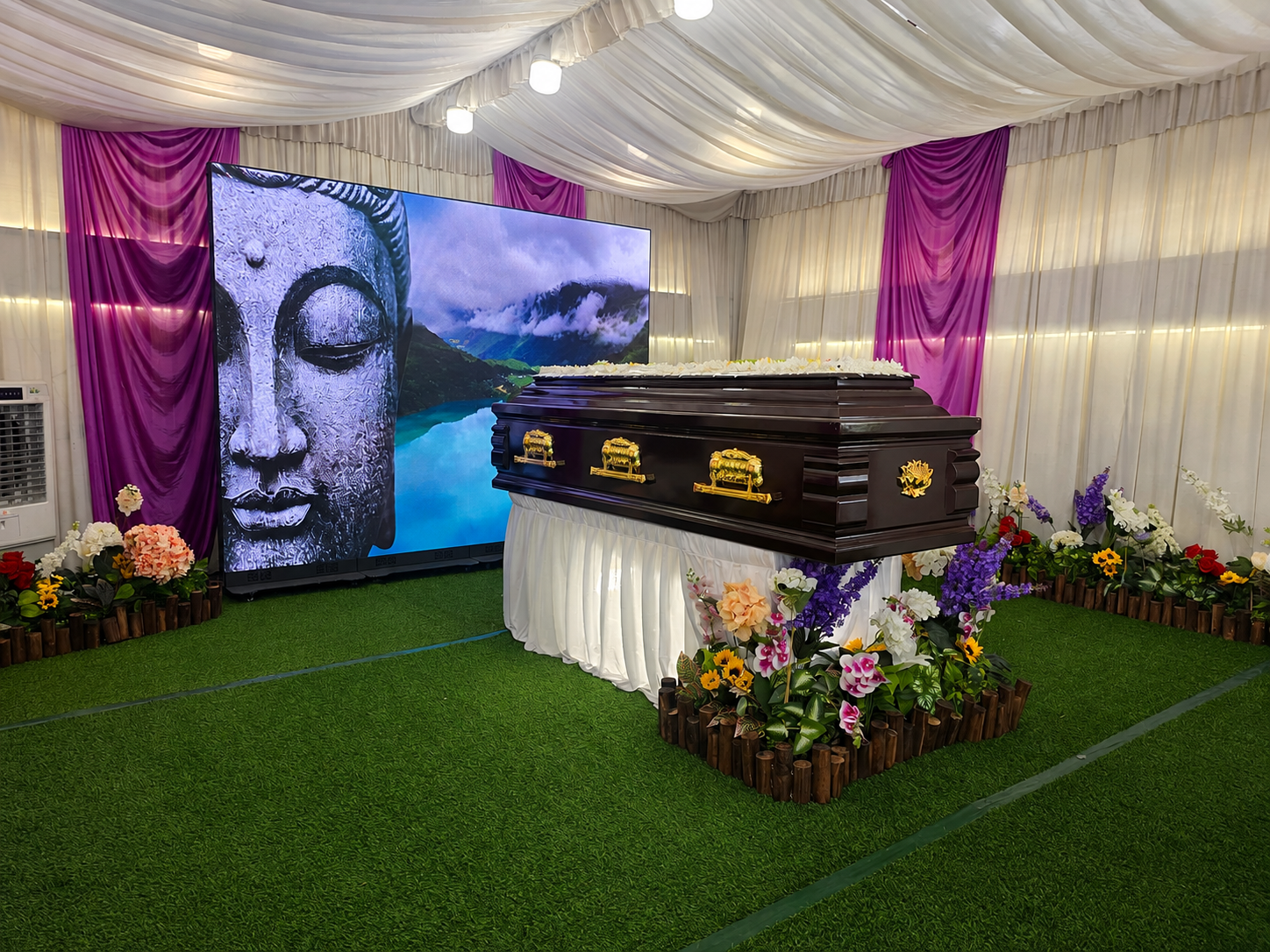
- Buddhist funeral wake setup and equipment
- Photo enlargement and memorial arrangements
- Coordination with monks or religious representatives where required
- Funeral-day transportation and logistics
- Cremation or burial arrangements
- Casket bearers and funeral-day assistance
- Ash collection arrangements
Buddhist Funeral Wake in Singapore
A Buddhist funeral wake allows relatives and friends to gather, pay their respects, remember the deceased and support the bereaved family.
The wake setup and religious arrangements can be prepared according to the family’s Buddhist tradition and preferences. Depending on the family’s practices, the wake may include an altar, memorial photograph, offerings, flowers and other appropriate ceremonial items.
Our funeral director coordinates the practical wake arrangements while the family and their religious representatives determine the appropriate religious proceedings.
Buddhist Funeral Prayers and Chanting
Prayer and chanting may form an important part of a Buddhist funeral. Depending on the family’s tradition, monks or other appropriate religious representatives may conduct chanting or prayer sessions during the wake and at other stages of the funeral.
The exact format, timing and number of prayer sessions can vary. Our funeral team can coordinate the funeral schedule around the religious arrangements requested by the family.
Buddhist Funeral Rituals and Traditions
Buddhist funeral practices are not identical for every family. Customs can differ according to Buddhist tradition, cultural background and the guidance of monks or religious representatives.
Families may have particular requirements regarding prayers, chanting, offerings, ceremonial items and the final funeral proceedings. We encourage families to follow the guidance of their chosen religious representatives for matters of Buddhist doctrine and ritual.
Our role is to ensure that the practical funeral arrangements are coordinated respectfully around those religious requirements.
Buddhist Cremation and Burial in Singapore
Cremation is commonly selected by Buddhist families, although funeral arrangements depend on the family’s traditions and wishes. Burial may also be arranged where appropriate.
When cremation is selected, our funeral director can assist with the necessary booking, transportation and funeral-day coordination. After cremation, we can also guide the family regarding ash collection and subsequent practical arrangements.
Buddhist Funeral Packages Singapore
Buddhist funeral arrangements vary according to the number of wake days, venue, casket selection, religious requirements, prayer arrangements and additional services requested by the family.
Our funeral director can explain the available Buddhist funeral package options and help the family select arrangements suitable for their religious requirements and budget.
Why Choose Singapore Funeral Committee?
Arranging a Buddhist funeral requires careful coordination between the family’s religious traditions and the practical requirements of the funeral.
Our funeral directors provide clear guidance throughout the arrangements and work respectfully with families, monks and religious representatives where required. From the initial collection of the deceased through the wake and final cremation or burial arrangements, our team coordinates the practical details of the funeral.
Frequently Asked Questions About Buddhist Funerals
What happens at a Buddhist funeral in Singapore?
A Buddhist funeral may include a wake, prayers, chanting, offerings and other ceremonial proceedings. The exact arrangements depend on the family’s Buddhist tradition and religious practices.
Are monks required for a Buddhist funeral?
This depends on the family’s tradition and wishes. Some families arrange for monks or other religious representatives to conduct prayers and chanting. Families should follow the guidance appropriate to their Buddhist tradition.
How long is a Buddhist funeral wake?
The length of the wake depends on the family’s requirements, religious arrangements, venue and other practical considerations. Our funeral director can help coordinate an appropriate funeral schedule.
Can Buddhist funeral prayers be arranged during the wake?
Yes. Where the family requires prayer or chanting sessions, these can be incorporated into the funeral schedule and coordinated with the family’s religious representatives.
Do Buddhists choose cremation or burial?
Cremation is commonly chosen by Buddhist families, although practices can vary. Families should consider their own religious traditions and preferences when deciding on the final arrangements.
Can a Buddhist funeral be personalised?
Families can discuss appropriate photographs, floral arrangements, memorial displays and other practical elements with our funeral director. Religious elements should follow the family’s Buddhist practices and guidance from their religious representatives.
Do you provide 24-hour Buddhist funeral assistance?
Yes. Our funeral team is available 24 hours a day to guide families through the immediate practical arrangements following a death.
24/7 Buddhist Funeral Assistance Singapore
If a death has occurred and your family requires Buddhist funeral arrangements, contact our funeral team for guidance on the next steps.
Call or WhatsApp Singapore Funeral Committee at +65 9844 8444 for 24/7 Buddhist funeral assistance.
 WhatsApp
 98448444