
 98448444



 Oct 05, 2026
Bringing a Loved One Back to Singapore After a Death Overseas
When a loved one passes away overseas, families may need to arrange their return to Singapore while managing unfamiliar procedures and difficult decisions.
Repatriation to Singapore involves coordinating the release of the deceased, the required documents, international transport and arrangements after arrival. This guide explains the main steps and questions to discuss with your funeral director.
For assistance, contact Singapore Funeral Committee at +65 9844 8444 or WhatsApp our team.
What Is Repatriation to Singapore?
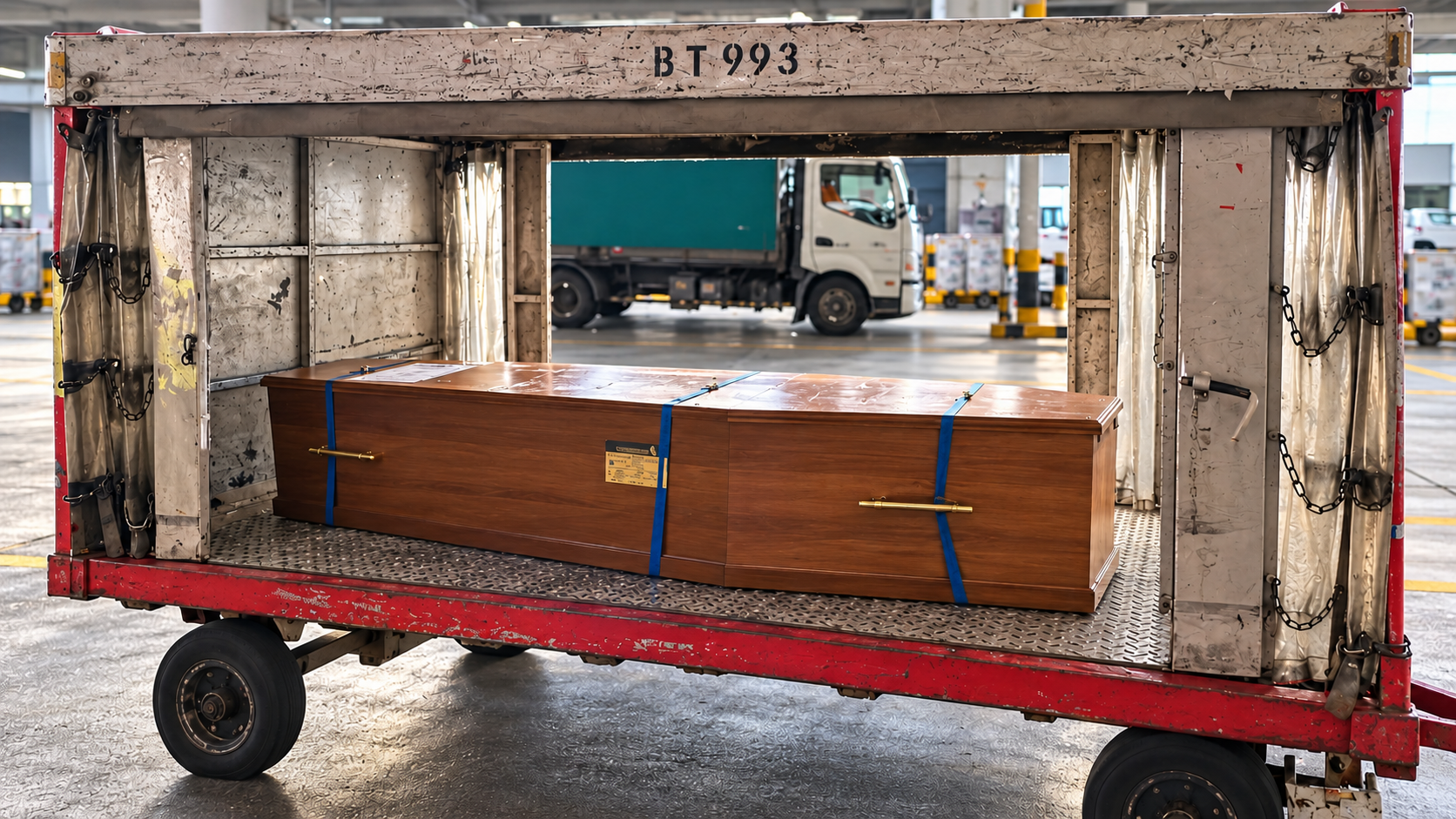
Body repatriation means transporting a deceased person from overseas to Singapore for funeral arrangements, cremation or burial.
Families may also consider cremation in the country where the death occurred and returning with the ashes. The appropriate choice depends on the family’s wishes, religious practices and the requirements of the countries involved. Read the MFA guide for bereaved families for further information.
What Should You Do First When a Loved One Dies Overseas?
Ensure the death is registered with the authorities in the country where it occurred and obtain the death certificate.
Check whether the deceased had insurance covering repatriation and contact the insurer promptly. Appoint funeral service providers to coordinate the overseas arrangements and the receiving arrangements in Singapore.
For a Singaporean who dies overseas, families can contact the nearest Singapore Overseas Mission or the MFA Duty Office at +65 6379 8800. MFA can provide information and liaise with foreign authorities where necessary, but does not pay repatriation or funeral expenses. See MFA’s guidance on a death overseas.
What Documents Are Needed to Bring a Body to Singapore?
A Coffin Import Permit is required to bring a body into Singapore. NEA lists supporting documents including:
- Overseas death documentation.
- A coffin sealing certificate.
- An embalming certificate, where applicable.
- The exporting country’s coffin export permit.
English translations may be required. An air waybill and additional documents may also be relevant to the application. Confirm the case-specific checklist with the appointed funeral director before transport is finalised. Refer to NEA’s requirements for deaths overseas.
Keep copies of the documents together and check that names and identification details are consistent.
How Does the Repatriation Process Work?
The arrangements generally involve these stages:
- Confirm release of the deceased. Establish what the overseas authorities require before transport can proceed.
- Prepare the documentation. Coordinate the certificates, translations and permits relevant to the case.
- Confirm transport arrangements. Check the carrier’s acceptance requirements and receiving arrangements before booking.
- Arrange reception in Singapore. Coordinate collection and onward transfer with the Singapore funeral director.
- Plan the funeral. Discuss the family’s preferred rites, venue and cremation or burial arrangements.
Your funeral director should explain which stages are confirmed and which remain subject to approval.
How Much Does Repatriation to Singapore Cost?
There is no single price that fits every journey. Request a written quotation covering the arrangements required for your case.
Ask whether the quotation includes:
- Overseas funeral provider charges and preparation.
- Documentation, translations and permits.
- Transport to the departure airport and international freight.
- Collection and onward transport in Singapore.
- Storage or additional charges if arrangements are delayed.
- Funeral services after arrival.
Separating transport costs from funeral costs makes quotations easier to compare. Check insurance coverage directly with the insurer before assuming expenses will be reimbursed.
How Long Does Repatriation Take?
Avoid making funeral plans around an unconfirmed arrival date.
Ask your funeral director what still needs to be completed, including release of the deceased, documentation, permits and transport acceptance. Request an estimated timeline and updates when each stage is confirmed.
A quoted estimate should not be treated as a guaranteed departure or arrival time.
Can a Funeral Be Arranged After Arrival in Singapore?
Discuss your preferred funeral arrangements with the receiving funeral director before the deceased arrives.
Eligibility matters: NEA distinguishes between Singapore citizens or permanent residents and foreign nationals. Foreign nationals can be brought into Singapore for cremation with the required permit. Importing a foreign national for burial requires NEA permission and is generally restricted. Read NEA’s guidance for the applicable requirements.
Explore our funeral services in Singapore to discuss arrangements suitable for your family.
Do You Need to Report the Overseas Death to ICA?
For a Singapore citizen, permanent resident or Long-Term Pass holder who dies overseas, ICA provides a process for reporting the death after it has been registered with the foreign authority.
Supporting documents include the overseas death certificate and identification documents. ICA specifies its accepted translation requirements for documents that are not in English. Visit ICA’s overseas death reporting page for the procedure and document checklist.
Repatriation Assistance for Your Family
If your family needs help understanding the next steps, contact Singapore Funeral Committee with the country where the death occurred, the deceased’s nationality and the intended arrangements in Singapore.
Visit our body repatriation services page or WhatsApp +65 9844 8444 to discuss your circumstances.
 WhatsApp
 98448444