
 98448444



 Jan 07, 2026
Roman Catholic Sea Burial in Singapore: What Church Teaching Says
Roman Catholic Sea Burial in Singapore: What Church Teaching Says
Families sometimes ask whether a Roman Catholic sea burial in Singapore is permitted after cremation.
Singapore law provides options for scattering cremated ashes at sea, but Catholic religious teaching places additional requirements on how the cremated remains of a Catholic should be treated.
The Catholic Church permits cremation when it has not been chosen for reasons contrary to the Christian faith. However, the Church teaches that cremated remains should ordinarily be laid to rest in a sacred place rather than scattered in the sea, on land or in the air.
This means Catholic families should distinguish between what is legally available in Singapore and what is consistent with Catholic funeral teaching.
Does the Catholic Church Allow Cremation?
Yes. The Catholic Church permits cremation.
The Church continues to express a preference for burial of the body, but cremation itself is not prohibited provided it is not chosen for reasons contrary to Catholic belief.
Catholic families may therefore arrange cremation following the appropriate funeral rites.
The important question is what happens to the cremated remains afterwards.
Can Catholic Ashes Be Scattered at Sea?
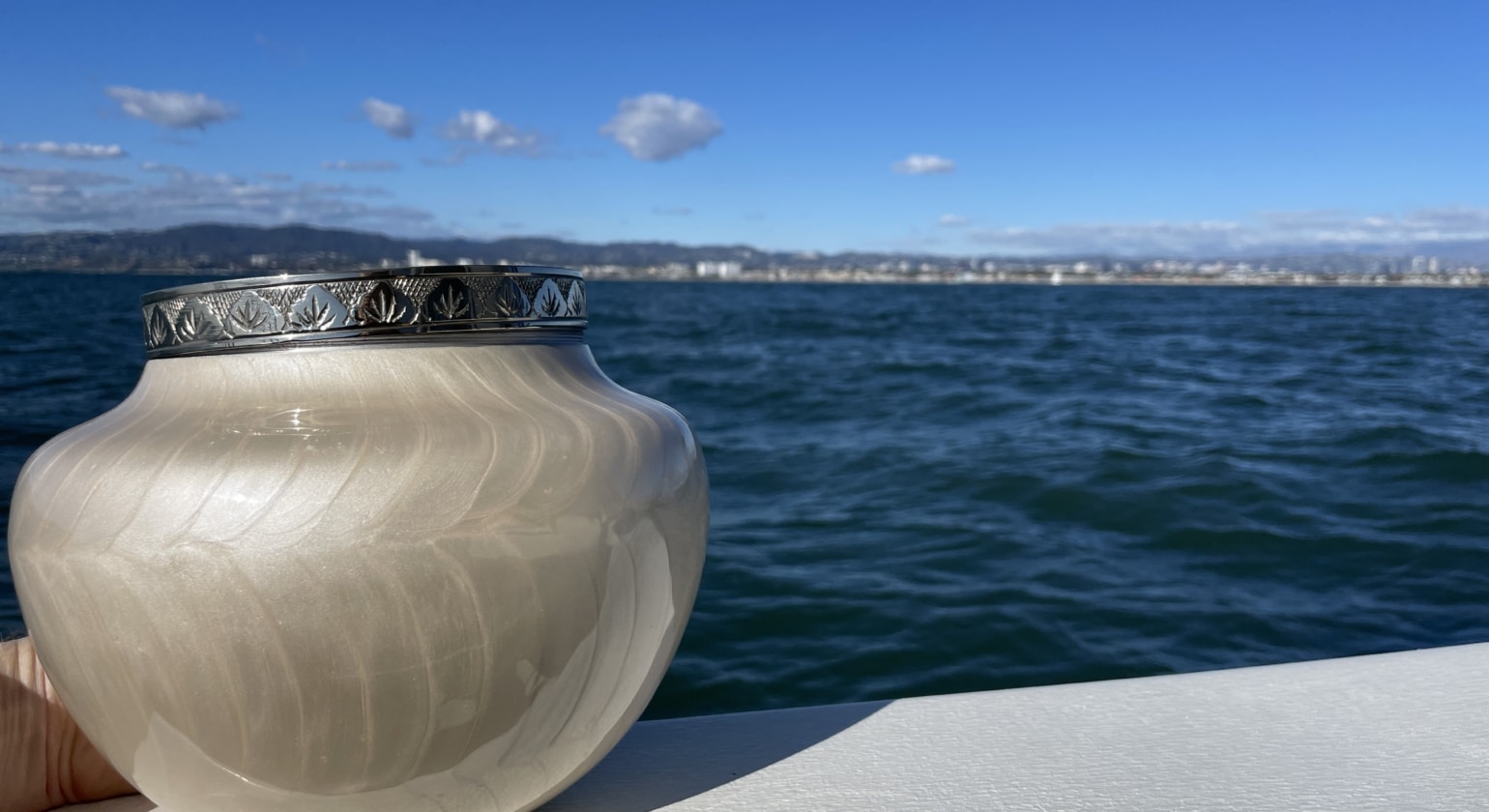
Under the Catholic Church’s general teaching, cremated ashes should not be scattered at sea.
The Church teaches that the ashes of the faithful should normally be placed in a sacred location, such as a cemetery, columbarium or another place that has been appropriately designated for this purpose by the competent Church authority.
This requirement reflects the Church’s respect for the body and its belief in the resurrection of the dead.
Therefore, a Catholic family should not assume that Singapore’s civil option of sea ash scattering automatically means that sea scattering is permitted under Catholic religious practice.
What Does the Church Mean by a Sacred Place?
A sacred place for cremated remains is generally a location set aside for the respectful and permanent repose of the deceased.
This may include:
- A cemetery
- A columbarium
- A church-related burial location where permitted
- Another area specifically designated for this purpose by the competent ecclesiastical authority
The purpose is to ensure that the deceased remains part of the prayer and remembrance of the Catholic community and that the cremated remains continue to be treated with dignity.
Does Placing the Ashes in a Sealed Urn Make Sea Burial Permissible?
Families should not assume that placing cremated ashes in a sealed urn automatically makes burial at sea acceptable under Catholic Church teaching.
The general Catholic requirement is that the ashes be laid to rest in a sacred place.
The Church’s official guidance does not establish a general rule that Catholics may simply place a sealed urn containing ashes into the sea.
If a family is considering an unusual arrangement involving an intact urn at sea, they should first speak with their parish priest or the appropriate Catholic authority before making any booking or committing to the arrangement.
Why Does the Catholic Church Discourage Scattering Ashes?
The Church’s concern is not that cremation itself is disrespectful.
Rather, Catholic teaching emphasises that cremated remains should continue to be treated with the same dignity given to the body of the deceased.
Keeping the ashes together in a recognised sacred resting place also helps preserve the memory of the deceased and provides a location connected with prayer and remembrance.
For these reasons, the Church does not consider scattering ashes in nature to be the ordinary appropriate final disposition for Catholic remains.
Can Catholic Families Use a Columbarium?
Yes. A columbarium is a common option for Catholic families after cremation.
The cremated remains are placed in an urn and kept together in a niche rather than being scattered.
Families should select an appropriate resting place and, where religious requirements are important, discuss the arrangement with their parish or priest.
Can Catholic Ashes Be Kept at Home?
Ordinarily, Catholic teaching calls for ashes to be placed in a sacred location rather than permanently kept in a private home.
Exceptional situations may be considered by the competent Church authority, but families should not assume that permanent home storage is automatically permitted.
A Catholic family wishing to keep ashes at home should first seek pastoral guidance.
Can the Ashes Be Divided Between Family Members?
The Catholic Church generally requires the cremated remains to be kept together rather than divided among different family members.
A Vatican clarification issued in 2023 explained that, in certain circumstances, the competent ecclesiastical authority may consider allowing a minimal portion of ashes to be preserved in an appropriate place significant to the deceased.
However, this is not a general permission for families to divide ashes themselves.
The main body of ashes must still be kept in a sacred place, and any exceptional arrangement requires appropriate Church consideration.
What if the Deceased Requested Sea Scattering?
A family may face a difficult situation when the deceased previously expressed a wish for their ashes to be scattered at sea.
For a Catholic funeral, relatives should discuss this with the parish priest rather than proceeding automatically.
The priest can explain the Church’s teaching and help the family consider an appropriate final resting place that respects both the deceased and Catholic religious practice.
Singapore Civil Rules vs Catholic Church Rules
It is important to understand that civil funeral regulations and religious rules are not always the same.
Singapore provides a designated maritime option for the scattering of cremated ashes.
This means sea ash scattering may be legally available to families generally.
However, a Catholic family must also consider Catholic religious teaching, which ordinarily requires cremated remains to be preserved in a sacred place rather than scattered at sea.
A funeral director can explain the practical options available in Singapore, while the parish priest or Catholic authority should guide the family regarding religious requirements.
Can a Catholic Funeral Mass Be Held Before Cremation?
Yes. Catholic families may arrange the funeral liturgy according to the practices of their parish and the circumstances of the funeral.
Where possible, families should coordinate early with the church, priest and funeral director so that the wake, Funeral Mass, cremation and final placement of the ashes can be planned properly.
The church should confirm matters relating to liturgical arrangements and religious rites.
What Happens After a Catholic Cremation?
After cremation, the family collects the cremated remains and arranges an appropriate permanent resting place.
For a Catholic family, this would ordinarily involve preserving the ashes together in a suitable sacred location.
The family can then continue to remember and pray for the deceased through Masses, anniversaries, visits to the resting place and other Catholic practices.
Can Catholic Families Choose Inland Ash Scattering?
Singapore offers inland ash-scattering facilities, including Garden of Peace and Garden of Serenity.
However, the same Catholic principle applies: the legal availability of an ash-scattering option does not automatically mean that it follows Catholic religious teaching.
Catholic families considering inland scattering should therefore seek guidance from their parish priest before proceeding.
What Should a Catholic Family Ask Their Parish?
Before deciding what to do with cremated remains, Catholic families may wish to ask their parish:
- What final resting places are appropriate for Catholic ashes?
- Whether a particular columbarium or cemetery is suitable
- What prayers or rites should accompany the final committal
- Whether any proposed unusual arrangement requires Church approval
- How the Funeral Mass and cremation should be coordinated
- What should be done if the deceased requested ash scattering
Speaking with the parish early can prevent the family from making a booking that later conflicts with the intended Catholic funeral arrangements.
What Should Families Tell the Funeral Director?
Families should tell the funeral director that the deceased is Catholic and that the funeral arrangements are intended to follow Roman Catholic practice.
This allows the funeral director to coordinate practical matters such as:
- Collection and transportation of the deceased
- Wake arrangements
- Casket preparation
- Church transportation
- Funeral Mass timing
- Cremation arrangements
- Collection of cremated remains
- Coordination with the family’s chosen final resting place
Religious questions should remain under the guidance of the family’s priest or parish.
Is Sea Burial Appropriate for Non-Catholic Families?
Sea ash scattering is available as a civil post-cremation option in Singapore for families who choose it and whose religious or personal beliefs permit the practice.
Different religions and families have different teachings and customs regarding cremated remains.
Families should therefore make decisions according to their own beliefs, traditions and the wishes of the deceased.
Frequently Asked Questions About Roman Catholic Ashes
Does the Catholic Church permit cremation?
Yes. Cremation is permitted provided it is not chosen for reasons contrary to Catholic teaching.
Can Catholic ashes be scattered at sea?
Catholic teaching ordinarily does not permit scattering the ashes of the faithful at sea, on land or in the air.
Can Catholic ashes be placed in a columbarium?
Yes. A suitable columbarium can provide a permanent and respectful resting place for cremated remains.
Can we keep Catholic ashes at home?
Ordinarily, ashes should be placed in a sacred location. Families considering an exceptional arrangement should seek guidance from the competent Church authority.
Can the ashes be divided among children?
Families should not divide cremated remains on their own. Catholic teaching generally requires the ashes to remain together, subject to limited exceptions considered by ecclesiastical authority.
Does placing ashes in a sealed urn make sea burial acceptable?
Families should not assume so. The general Catholic requirement concerns placing the ashes in a sacred resting place, not merely keeping them inside a sealed container.
Who should we ask if we are unsure?
The family should speak with their parish priest or the appropriate Catholic authority before finalising the disposition of the ashes.
Roman Catholic Funeral Services Singapore
Singapore Funeral Committee assists families with Roman Catholic Funeral Services Singapore, including wake arrangements, church coordination, funeral-day transportation and cremation or burial arrangements.
Our funeral directors can coordinate the practical funeral requirements while working with the family and their chosen parish.
Questions concerning Catholic doctrine, liturgy or the appropriate final resting place for cremated remains should be confirmed with the family’s priest or church.
24/7 Catholic Funeral Assistance Singapore
When a death occurs, families may need to coordinate the wake, church, cremation and final resting place within a short period.
Singapore Funeral Committee provides 24/7 funeral assistance and can help families organise the practical arrangements while respecting the guidance provided by their Catholic parish.
For immediate Catholic funeral assistance, call or WhatsApp Singapore Funeral Committee at +65 9844 8444.
 WhatsApp
 98448444